Introduction to Stacker Cranes and Wheel Requirements
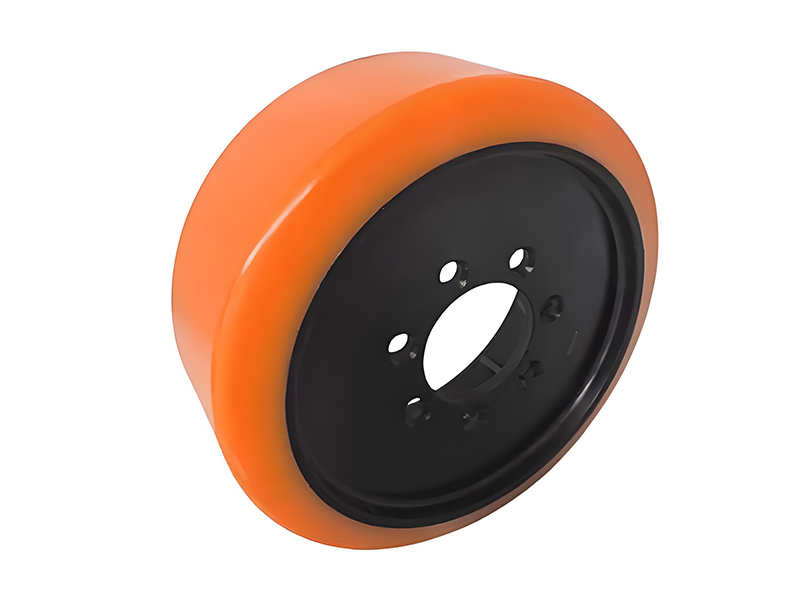
A stacker crane wheel must simultaneously bear immense vertical loads, resist lateral forces from acceleration, and maintain a smooth, vibration-free ride. Steel wheels, once the default, transmit harsh shocks through the mast and can damage rails over time. Rubber wheels offer cushioning but wear quickly under heavy cycles. Polyurethane-coated wheels for stacker crane bridge these worlds, delivering the load capacity of metal with the resilience and quiet operation of a polymer.
Advantages of Polyurethane-Coated Wheels
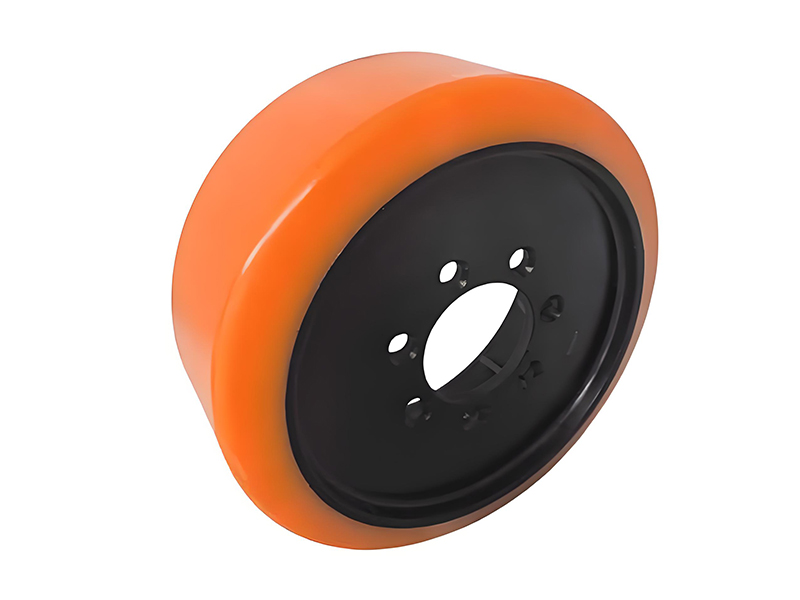
Polyurethane absorbs shock and vibration up to five times more effectively than steel, protecting both the crane structure and the rail beneath it. The material's high coefficient of friction means less slipping during rapid acceleration, improving positioning accuracy in automated storage and retrieval systems. Unlike rubber, polyurethane resists oils, greases, and many industrial solvents, so a minor hydraulic leak does not turn the wheel into a sticky, degraded mess.
It also outlasts rubber by a factor of three to five in continuous duty, reducing downtime in facilities that run twenty-four hours a day. The result is a wheel that quietly does its job for years, not months.
Customization Options for Polyurethane Wheels
No two stacker cranes face identical demands, and off-the-shelf wheels rarely deliver optimal performance. Custom polyurethane wheels begin with the hub—cast iron, aluminum, or steel—machined to tolerances measured in microns. The polyurethane is then bonded to the hub using specialized primers and casting techniques that prevent delamination under shear stress. Formulators can adjust the durometer, or hardness, from a soft 70 Shore A for gentle, low-noise applications to a hard 95 Shore A for maximum load capacity. Colorants, antistatic additives, and even conductive fillers are available for explosive or cleanroom environments. The table below compares typical specifications across three common configurations.
| Parameter | Light-Duty Series | Standard Series | Heavy-Duty Series |
|---|---|---|---|
| Durometer (Shore A) | 75 | 85 | 93 |
| Load Capacity (kg) | 800 | 2,500 | 6,000 |
| Max Speed (m/min) | 120 | 180 | 240 |
| Operating Temp (°C) | -10 to 50 | -20 to 70 | -30 to 90 |
| Hub Material | Aluminum | Cast Iron | Forged Steel |
Key Applications in Stacker Crane Operations
In a frozen-food warehouse where temperatures plunge to minus twenty-five degrees Celsius, standard polyurethane becomes brittle and cracks. A custom formulation with plasticizers and a low-glass-transition backbone stays flexible, rolling smoothly across frost-dusted rails.
In an electronics cleanroom, the wheel must not shed particles; a post-cured, machined-finish polyurethane surface releases virtually no debris.
High-speed mini-load cranes in e-commerce fulfillment centers demand wheels that can accelerate to two hundred meters per minute without slipping, so a harder compound with a precisely ground crown is specified.
Explosive-atmosphere facilities, such as paint or solvent storage, require conductive polyurethane that dissipates static electricity before a spark can form.
Each application writes its own set of requirements, and the wheel is engineered to read them perfectly.
Maintenance and Longevity Considerations
Even the finest polyurethane wheel eventually shows its age, but the decline is gradual and predictable. Inspectors look for flat spots caused by emergency braking, cracks radiating from the hub bond line, and a glossy, glazed surface that signals overheating.A wheel that has lost its matte finish may still function, but its traction and shock absorption have diminished. Replacing wheels on a stacker crane is not a casual task; the mast must be blocked, the rail cleaned, and the new wheel pressed onto the axle with a hydraulic ram.
To extend service life, facilities should keep rails free of metal chips and abrasive grit, which act like sandpaper on the polyurethane tread. Proper alignment of the crane's guide rollers reduces side loads on the wheel, and avoiding sustained overloads prevents premature compression set. With attentive care, a custom polyurethane wheel can log tens of thousands of kilometers, wearing down by fractions of a millimeter per year