Article Outline
An overview of the key aspects and processes involved in customizing subsea cable protection systems to meet specific project requirements.
Introduction to Subsea Cable Protection Systems→
Factors Driving Customization Needs→
Customization Design and Engineering Process→
Materials and Manufacturing for Custom Solutions
Introduction to Subsea Cable Protection Systems
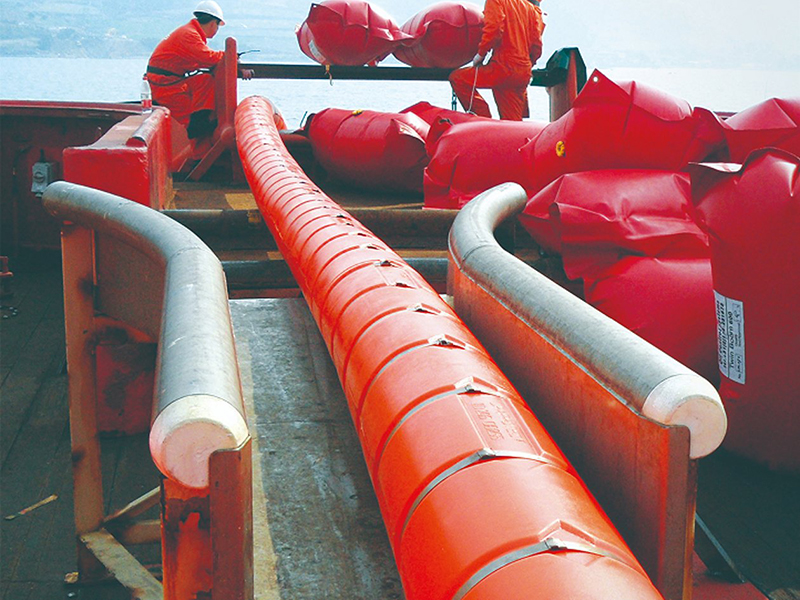
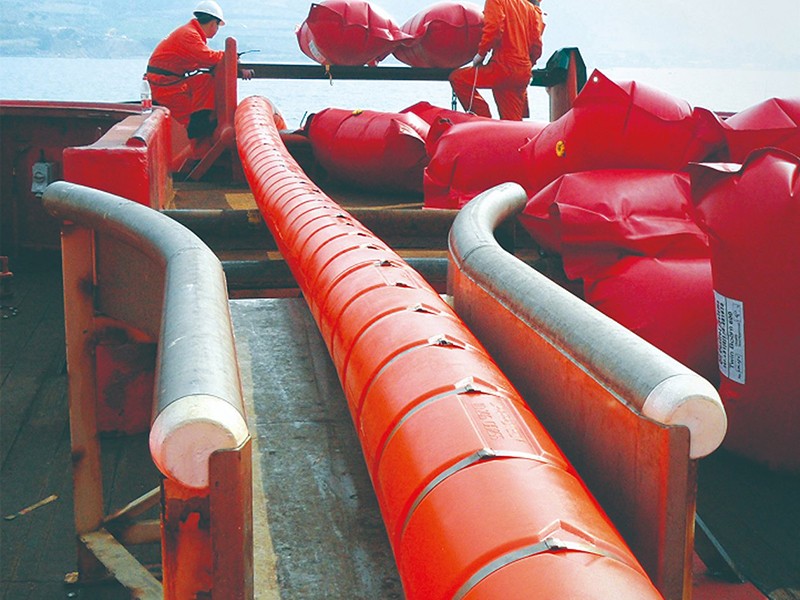
A subsea cable protection system—a layered assembly of bend restrictors, impact guards, and anchoring devices designed to shield critical cables from trawler nets, anchors, and abrasion. No two installations are identical, and that reality drives the demand for customization.
Factors Driving Customization Needs
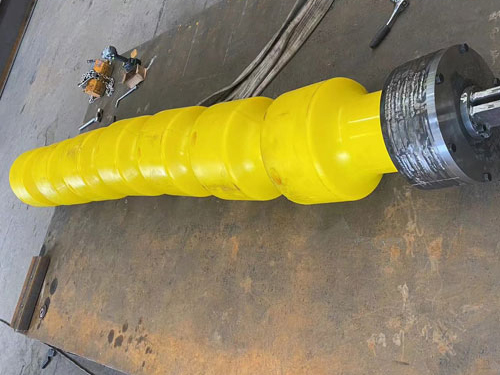
Manufacturing floor where custom subsea cable protection systems are assembled.
The seafloor itself dictates the first set of variables. Varying soil characteristics determine the required stiffness of the
polyurethane bend restrictor. Water depth adds another layer: at 2,000 meters, external pressure exceeds 200 bar, crushing hollow designs and forcing engineers toward solid, pressure-compensated geometries. Tidal currents, seismic activity, and even the presence of iceberg scours in polar regions further refine the specification. Each project begins with a site survey that reads like a fingerprint—unique, non-transferable, and impossible to ignore. A single overlooked parameter, such as seasonal sediment migration, can turn a standard product into a failure.
Customization Design and Engineering Process
The specific custom manufacturing process of subsea cable protection system is as follows:
First, the client provides details regarding the operating environment and product specifications.
Second, engineers fine-tune the parameters for each segment of the bend restrictor, including the number of segments, interlocking angles, and material hardness.
Third, the final components—whether made of steel or composite materials—undergo mechanical machining.
Materials and Manufacturing for Custom Solutions
Material selection balances corrosion resistance, weight, and cost. For deepwater oil fields, duplex stainless steel 2205 offers yield strength above 450 MPa while resisting chloride pitting. For shallow, dynamic riser sections, glass-reinforced epoxy (GRE) provides flexibility and dielectric isolation. Manufacturing methods vary just as widely: filament winding for cylindrical bend restrictors, vacuum-assisted resin transfer molding for complex impact guards, and explosive welding for dissimilar metal joints. The table below compares three common material systems across key parameters.
| Material System | Max Depth (m) | Impact Energy Absorption (J) | Relative Cost Index | Typical Application |
|---|
| Duplex Stainless Steel | 3,000 | 12,000 | 4.5 | Deepwater oil & gas |
| Glass-Reinforced Epoxy | 800 | 3,500 | 1.8 | Shallow dynamic cables |
| Polyurethane Elastomer | 500 | 1,200 | 1.0 | Tidal flats, short spans |
| Hybrid Steel-Composite | 2,200 | 8,000 | 3.2 | Seismic zones |
Frequently Asked Questions (FAQ)
Q: What factors drive the need for customizing subsea cable protection systems?
A: Customization is driven by seabed conditions like sand or rock, water depth and pressure, tidal currents, seismic activity, and iceberg scours. Each site survey is unique, so a single overlooked parameter can cause failure.
Q: How does the engineering process for a customized protection system work?
A: Engineers start with client conversations and site data, then use finite element analysis to simulate stresses like trawl impact and anchor drag. They tune bend restrictor elements, prototype with 3D-printed polymers, and iterate to cut lead times from months to days.
Q: What materials are used for custom subsea cable protection and why?
A: Material choice balances corrosion resistance, weight, and cost. Deepwater oil fields use duplex stainless steel 2205 for high yield strength and chloride resistance, while shallow dynamic sections use glass-reinforced epoxy for flexibility and dielectric properties.