Introduction to Vertebrae Bend Restrictors
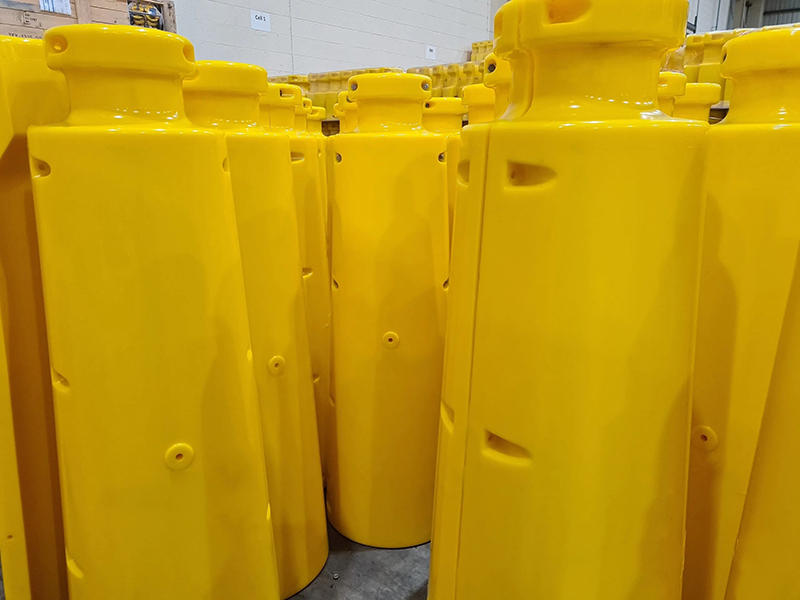
Vertebrae Bend Restrictors are critical engineering components that determine the operational lifespan of subsea cables, umbilicals, and flexible risers. The core argument for investing in high-performance OEM production is simple: a generic, off-the-shelf restrictor may pass basic tests, but it will fail under the combined stresses of deepwater pressure, dynamic wave loading, and repeated bending cycles. An OEM Bend Restrictor with Polyurethane exhibits a fatigue life exceeding 20 years.
Key Design and Material Requirements
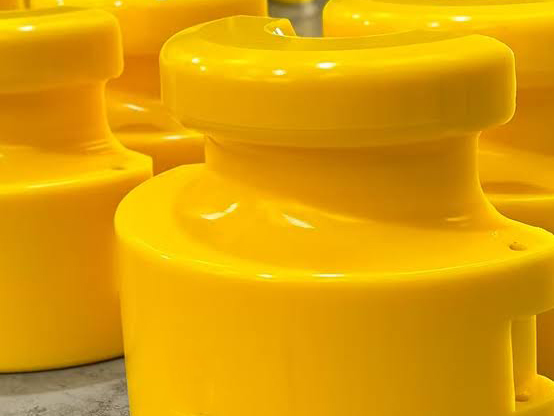
The design of vertebrae bend restrictors hinges on a fundamental trade-off: flexibility for installation versus rigidity for protection. Each vertebra must interlock to form a smooth radius under load while preventing the cable from exceeding its minimum bend radius (MBR).
The most contentious material choice is between polyurethane (PU) and glass-reinforced polyamide (PA-GF). Proponents of PU cite superior impact resistance and lower cost, but PA-GF offers higher tensile strength and creep resistance at elevated temperatures. In a direct comparison, a PA-GF restrictor tested at 80°C and 10 MPa external pressure showed only 0.3% deformation after 1,000 hours, while a PU equivalent deformed by 2.1%.
| Material | Tensile Strength (MPa) | Max Operating Temp (°C) | Relative Cost | Typical Application |
|---|---|---|---|---|
| PU Shore 55D | 45 | 60 | Low | Shallow water, static cables |
| PA6-GF30 | 110 | 120 | Medium | Dynamic risers, deepwater |
| PEEK-CF | 180 | 250 | High | High-temp, sour service |
OEM Manufacturing Process and Technologies
OEM production of vertebrae bend restrictors is not a single process but a chain of tightly controlled steps, each with its own failure modes. Injection molding dominates for high-volume runs, but the mold design determines inter-vertebral clearance—too tight, and the restrictor locks; too loose, and it fails to constrain bending.
For production, we rely on multi-cavity hot-runner molds with in-mold pressure sensors. Consider a case where we switched from a single-cavity cold-runner mold to an 8-cavity hot-runner system: cycle time dropped from 90 seconds to 35 seconds, and dimensional variation (Cpk) improved from 1.0 to 1.8. However, the higher upfront tooling cost—often exceeding $150,000—only makes sense for annual volumes above 50,000 vertebrae.
Quality Control and Performance Testing
Quality control in OEM production is where rhetoric meets reality. We provide application-specific test data and operate under the ISO 9001 quality certification system. Furthermore, we conduct three tests often omitted by standard manufacturers: full-scale bending cycle testing under simultaneous tensile and internal pressure loads, thermal cycling tests ranging from -20°C to 80°C, and 1,000-hour salt spray corrosion testing. We provide CMM (Coordinate Measuring Machine) inspection reports for every product batch and strictly control tolerances for critical dimensions—such as pitch and hinge radius—keeping them within ±0.05 mm.